Choosing a skincare manufacturer in China can be one of the most important decisions your beauty brand makes.
A good manufacturer does much more than fill bottles. The right partner can help you refine formulas, improve packaging choices, manage compliance documents, control production quality, and scale from your first order to long-term retail supply. The wrong partner can create delays, unstable formulas, inconsistent batches, unclear communication, and expensive relaunch problems.
China remains one of the world’s most active skincare manufacturing hubs because it combines formulation laboratories, packaging suppliers, raw material sourcing, automated filling lines, export experience, and flexible OEM/ODM production models. But the market is not uniform. Some companies are verified factories with strong R&D and compliance systems. Others are trading companies, small workshops, or middlemen with limited control over production.
This guide explains how to choose a reliable skincare manufacturer in China, what to check before placing an order, and how to avoid common mistakes when building a private label, OEM, or ODM skincare brand.
Quick Answer: What Should You Look for in a China Skincare Manufacturer?
A reliable skincare manufacturer in China should have verifiable factory ownership, OEM/ODM capability, transparent MOQ, strong R&D support, quality certifications, clean production facilities, stable raw material sourcing, packaging support, export experience, and clear communication.
Before working with a supplier, check these areas:
| Evaluation Area | What to Check |
| Factory credibility | Business license, factory photos, audit reports, certifications |
| Manufacturing model | Private label, ODM, OEM, or turnkey support |
| R&D capability | Formula library, custom formulation, sample development |
| Compliance | FDA, MoCRA, EU CPNP/PIF, CPSR, COA, MSDS support |
| Quality control | Raw material inspection, batch testing, stability testing |
| MOQ | Whether it matches your launch stage and budget |
| Packaging | Stock packaging, custom molds, label, printing, compatibility |
| Lead time | Sampling, testing, production, filling, shipping schedule |
| Communication | Fast replies, clear quotation, realistic technical answers |
| Scalability | Ability to grow from small batches to large production runs |
If you are just starting, it may help to first understand the difference between private label, OEM, and ODM skincare manufacturing before comparing factories.
Start by Defining What Kind of Manufacturer You Need
Before searching for suppliers, clarify what you actually need. Many brand owners search for “skincare manufacturer China” without knowing whether they need private label, ODM, OEM, or a full turnkey partner.
These models are different.
Private label skincare means you select an existing formula from the manufacturer and sell it under your own brand name. It is usually the fastest path for startups, spas, influencers, Amazon sellers, and distributors.
ODM skincare means the manufacturer helps develop or customize a formula based on your product concept. This is useful when you want a more differentiated product but do not have your own formulation team.
OEM skincare means you provide the formula, technical specifications, or product requirements, and the factory manufactures according to your standard.
Turnkey manufacturing means the supplier supports formulation, packaging, filling, labeling, documentation, and sometimes logistics. This is often the most practical choice for overseas brands that want one coordinated production partner.
If you are unsure which model fits your business, start with a simple question: do you need speed, differentiation, or full control?
For speed, choose private label.
For differentiation, choose ODM.
For formula ownership and strict specifications, choose OEM.
Sheleys supports multiple manufacturing models for global beauty brands, including private label skincare and OEM/ODM services, which makes it easier for brands to start lean and scale later.
Verify Whether You Are Dealing With a Factory or a Trading Company
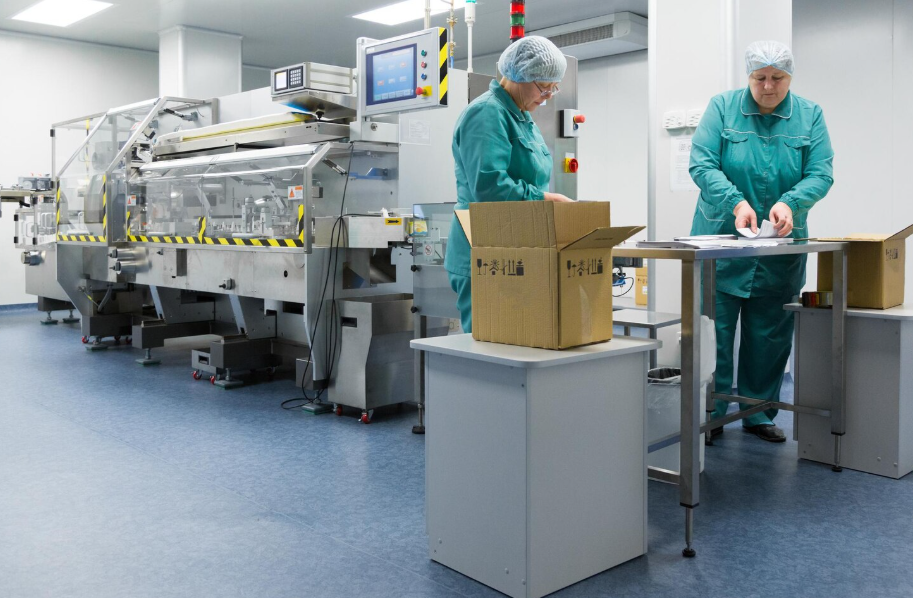
One of the most common risks when sourcing in China is not knowing who you are actually working with.
A trading company may have good salespeople and polished catalogs, but it may not own production lines, laboratories, or quality control systems. This is not always bad, but it can create problems if you need technical support, fast sampling, transparent pricing, or direct production accountability.
- A real skincare factory should be able to show:
- Factory address
- Production workshop photos or videos
- Filling lines and mixing equipment
- Quality control process
- Business license
- Factory audit documents
- Certifications such as ISO 22716 or GMPC
- R&D laboratory capability
- Production capacity
- Export history
You should also ask whether the company owns the factory or works with partner factories. Direct ownership usually gives you better control over quality, cost, lead time, and communication.
For example, Sheleys is based in Guangzhou, Guangdong, one of China’s major cosmetics manufacturing centers, and presents itself as a direct skincare and personal care manufacturing partner. You can review its factory positioning and company background on the About Sheleys page.
Check Certifications and Compliance Support
Skincare is not just a consumer product. It is a regulated product category, and compliance requirements vary by market.
A reliable skincare manufacturer should understand the compliance expectations of your target market, especially if you plan to sell in the United States, European Union, United Kingdom, Canada, Australia, or the Middle East.
Ask whether the manufacturer can support:
- ISO 22716 cosmetic GMP standards
- GMPC certification
- FDA registration support
- MoCRA-related documentation for the U.S. market
- EU CPNP notification support
- PIF and CPSR preparation support
- COA for finished goods
- MSDS/SDS
- Ingredient INCI list
- Microbial testing
- Heavy metal testing if required
- Stability and compatibility testing
- Label review support
Be careful with manufacturers that say “no problem” to every market without asking where you plan to sell. A serious supplier will ask about your target country, product category, claims, active ingredients, label language, and distribution channel.
For example, sunscreen, baby care, acne care, whitening claims, and anti-hair-loss claims may have stricter regulatory considerations than a basic moisturizer.
If you are planning a compliant product launch, read Sheleys’ guide on how to choose the right OEM skincare manufacturer in China as a supporting resource.
Evaluate R&D Capability, Not Just Product Catalogs
A product catalog is useful, but it does not prove that a manufacturer has strong R&D capability.
Many suppliers can send a list of cleansers, serums, creams, masks, and lotions. Fewer can explain why one formula works better for sensitive skin, humid climates, airless packaging, fragrance-free positioning, or EU compliance.
A strong skincare manufacturer should be able to discuss:
- Formula texture
- Skin feel
- Active ingredient compatibility
- Preservative systems
- Emulsion stability
- pH range
- Packaging compatibility
- Fragrance restrictions
- Vegan and cruelty-free requirements
- Clean beauty positioning
- Market trend adaptation
- Sample revision process
For private label projects, ask how many stable formulas are available and whether small adjustments can be made. For ODM projects, ask how the factory develops samples from a brief. For OEM projects, ask whether the factory can scale your formula without changing its performance.
If your product line includes multiple categories, choose a manufacturer with broader R&D coverage across face care, body care, hair care, and baby care. A broader technical base can make future product expansion easier.
Understand MOQ Before You Fall in Love With a Formula
MOQ, or minimum order quantity, is one of the biggest friction points for new skincare brands.
Some founders want fully custom formulas, custom packaging, multiple scents, premium boxes, and low unit cost, but only want to order 100 pieces. In most cases, that is not realistic.
MOQ depends on:
- Product type
- Formula complexity
- Raw material availability
- Packaging type
- Decoration method
- Labeling or printing process
- Whether the formula is stock or custom
- Whether packaging is stock or custom
- Production line setup cost
- Testing requirements
Private label usually has the lowest MOQ because the formula already exists. ODM often requires a higher MOQ because the factory must invest time in development and material preparation. OEM MOQ depends on your formula, raw materials, and packaging requirements.
Before asking for a price, prepare your target order quantity per SKU. This helps the supplier recommend a realistic production model.
For a deeper explanation, see Sheleys’ article on private label skincare MOQ.
Ask About Sampling and Product Development Process
Sampling is where many manufacturing projects either become clear or start going sideways.
A professional skincare manufacturer should have a structured sampling process. They should not simply send random products and ask you to choose.
For private label, the sampling process may include choosing from existing formulas, testing texture and fragrance, selecting packaging, and confirming label direction.
For ODM, the process should include a product brief, benchmark discussion, ingredient direction, first sample, feedback, revised sample, stability consideration, and packaging compatibility check.
For OEM, the process may include formula review, raw material sourcing, lab batch, pilot batch, and production trial.
Ask these questions:
- How long does sample development take?
- How many sample revisions are included?
- Can the formula be adjusted for texture, scent, viscosity, or active ingredients?
- Will the final production batch match the approved sample?
- How is sample feedback documented?
- What happens if the formula fails stability testing?
- Can the sample be tested with final packaging?
A good manufacturer treats sampling as controlled validation, not a casual product giveaway.
You can also review Sheleys’ article on how long private label skincare production takes to understand how sampling affects the full launch timeline.
Review Packaging Capability and Compatibility
Packaging is not decoration only. In skincare, packaging affects stability, user experience, perceived value, shipping cost, and compliance.
A serum may need a dropper bottle, airless pump, or squeeze tube depending on viscosity and oxidation sensitivity. A cream may work better in a jar or airless pump depending on formula and positioning. Baby care products may require safer, softer, easier-to-use packaging. Sunscreen packaging must support accurate dispensing and formula protection.
Ask whether the manufacturer can support:
- Stock packaging
- Custom packaging sourcing
- Bottle, jar, tube, pump, dropper, sachet, and stick formats
- Label printing
- Silkscreen printing
- Hot stamping
- Color matching
- Carton box design support
- Packaging compatibility testing
- Leakage testing
- Shipping carton design
Do not finalize packaging before the formula is confirmed. A beautiful bottle is useless if the product leaks, separates, oxidizes, clogs, or reacts with the packaging material.
This is especially important for active products, sunscreens, oils, exfoliants, and baby products such as private label baby sunscreen.
Compare Quality Control Systems
Quality control is where a serious skincare manufacturer separates itself from a low-cost supplier.
A reliable factory should inspect raw materials, monitor production conditions, test semi-finished bulk, check filling accuracy, inspect packaging, and keep batch records.
Ask about:
- Raw material inspection
- Supplier qualification
- Water quality control
- Microbial testing
- Viscosity testing
- pH testing
- Appearance and odor inspection
- Filling weight checks
- Batch numbering
- Retention samples
- Finished product inspection
- Stability testing
- Complaint handling
- Traceability process
You should also ask what happens if a batch fails inspection. A strong supplier will have a corrective process. A weak supplier may avoid the question or blame the customer.
Quality control may feel invisible when everything goes well, but it becomes extremely important when your brand begins selling at scale.
Look at Communication Quality Early
Communication is not a soft factor. It is an operational factor.
When working across time zones, languages, technical details, and export requirements, poor communication can cause real financial loss.
A good manufacturer should provide clear answers about:
- MOQ
- Formula options
- Sample timing
- Quotation structure
- Packaging choices
- Compliance documents
- Lead time
- Payment terms
- Shipping options
- Production risks
- Project next steps
Be cautious if a supplier gives vague answers, avoids technical questions, refuses to explain cost drivers, or pushes you to pay before understanding your project.
Also watch how they respond when you ask difficult questions. A serious partner will not promise everything instantly. They will explain what is possible, what needs testing, and what may increase cost or time.
For a smoother first conversation, prepare a short project brief before contacting the manufacturer. Include your product type, target market, desired MOQ, packaging preference, benchmark products, claim direction, and timeline. Then submit the brief through the Sheleys contact page.
Be Careful With Prices That Are Too Low
Everyone wants competitive pricing. But in skincare manufacturing, the cheapest quote can become the most expensive mistake.
Extremely low prices may indicate:
- Low-quality raw materials
- Weak preservative system
- Poor packaging
- No proper testing
- Unstable formula
- Inaccurate filling
- Unreliable documentation
- Hidden middleman markup
- Inconsistent batch quality
- No after-sales responsibility
Instead of asking only “What is your cheapest price?”, ask what is included in the price.
- Does it include packaging?
- Does it include label application?
- Does it include carton boxes?
- Does it include testing?
- Does it include documents?
- Does it include sample revisions?
- Does it include custom fragrance?
- Does it include export packaging?
You need a transparent cost structure, not just a low number.
Match the Manufacturer to Your Product Category
Not every skincare manufacturer is good at every product type.
Some factories are strong in basic creams and lotions but weak in sunscreen. Some are good at hair care but not baby care. Some can produce simple private label products but cannot manage custom formulas.
Before choosing a manufacturer, check whether they have experience with your intended category.
For example:
For facial skincare, ask about serums, creams, cleansers, toners, masks, sensitive skin formulas, brightening, anti-aging, and acne-care products.
For body care, ask about body lotion, body wash, scrubs, hand cream, body oils, and firming products.
For hair care, ask about shampoo, conditioner, hair masks, hair oils, scalp care, and sulfate-free systems.
For baby care, ask about mild formulas, fragrance-free options, dermatological testing, tear-free cleansing, and stricter safety margins.
For sunscreen, ask about SPF testing, filter systems, stability, packaging, and regional regulations.
Choosing by category experience reduces technical risk.
Check Whether the Manufacturer Can Scale With You
Your first order may be small, but your manufacturer should not only be able to serve your first order. They should be able to support your next stage.
Ask:
- Can they increase volume if the product sells well?
- Can they support repeat orders consistently?
- Can they keep formula and packaging records?
- Can they manage multiple SKUs?
- Can they help expand into new product categories?
- Can they support export documentation as your markets grow?
- Can they maintain consistent quality across batches?
A manufacturer that is fine for a test order may not be suitable for retail scaling. If your goal is to build a serious beauty brand, choose a partner with both flexibility and production capacity.
Sheleys positions itself as a scalable partner for brands moving from startup orders to larger production runs. You can review more details on the Sheleys homepage.
Red Flags When Choosing a Skincare Manufacturer in China
Avoid manufacturers that show these warning signs:
They cannot prove factory ownership or production access.
- They avoid certification questions.
- They offer custom formulas instantly with no development process.
- They promise unrealistic lead times.
- They say every claim is allowed in every market.
- They cannot explain MOQ clearly.
- They refuse to provide ingredient information.
- They do not discuss stability or compatibility testing.
- They provide unclear quotations.
- They push you to choose packaging before formula confirmation.
- They have poor communication before payment.
- They cannot provide basic documents such as COA or MSDS.
Many skincare brand problems begin before production, during supplier selection. If a manufacturer seems unclear at the beginning, the project rarely becomes easier later.
For more pitfalls, read Sheleys’ guide to common mistakes when starting a private label skincare brand.
Best Questions to Ask Before Placing an Order
Before paying a deposit, ask your skincare manufacturer these questions:
- Are you a factory or trading company?
- Where is your factory located?
- What certifications do you have?
- Do you support private label, ODM, and OEM?
- What is your MOQ per SKU?
- What formulas are available for private label?
- Can you develop custom formulas?
- How long does sampling take?
- How many sample revisions are included?
- Can you support packaging sourcing?
- Do you test packaging compatibility?
- What documents can you provide?
- Can you support FDA, MoCRA, EU CPNP, or PIF requirements?
- What is the full production lead time?
- How do you control batch quality?
- What happens if there is a production issue?
- Do you keep retention samples?
- Can you support repeat orders and scaling?
A good manufacturer will welcome these questions because they show that you are building a serious brand.
A Practical Step-by-Step Selection Process
Here is a simple process to choose a skincare manufacturer in China.
Step 1: Define your product category and brand positioning.
Step 2: Decide whether you need private label, ODM, OEM, or turnkey service.
Step 3: Shortlist 5 to 10 manufacturers with relevant category experience.
Step 4: Check factory credibility, certifications, and export experience.
Step 5: Send the same project brief to each supplier.
Step 6: Compare response quality, not just price.
Step 7: Request samples and test them carefully.
Step 8: Discuss packaging, compliance, MOQ, and lead time.
Step 9: Confirm final formula, packaging, artwork, and documents.
Step 10: Start with a controlled first order before scaling.
This process may feel slower at the beginning, but it protects your brand from expensive mistakes.
Final Thoughts: Choose a Partner, Not Just a Supplier
Choosing a skincare manufacturer in China is not simply about finding the lowest unit price. It is about finding a partner that can support product quality, compliance, packaging, communication, and long-term growth.
For early-stage brands, the right manufacturer can help you move from idea to market without getting trapped in technical complexity. For growing brands, the right partner can help develop more differentiated formulas and scale production reliably. For established companies, the right OEM/ODM factory can protect quality while improving supply chain efficiency.
If you are looking for a skincare manufacturer in China that supports private label, OEM, ODM, packaging, formulation, and compliance documentation, Sheleys can help you evaluate the best path for your brand.
Explore Sheleys’ custom skincare manufacturing services, learn more about the company on the About page, or contact the team to discuss your project.
FAQ: Choosing a Skincare Manufacturer in China
Is China a good place to manufacture skincare products?
Yes. China has a strong cosmetics manufacturing ecosystem, especially in regions such as Guangzhou and Guangdong. The country offers mature supply chains, packaging options, formulation labs, export experience, and flexible OEM/ODM services. The key is choosing a verified and compliant manufacturer.
What is the difference between OEM and ODM skincare manufacturing?
OEM means the brand provides the formula or product specifications, and the factory manufactures according to them. ODM means the manufacturer helps provide or develop the formula, which the brand can customize and sell under its own name.
What MOQ should I expect from a China skincare manufacturer?
MOQ depends on product type, packaging, formula complexity, and customization level. Private label products usually have lower MOQ, while custom ODM or OEM products often require higher quantities. For more detail, read this guide on private label skincare MOQ.
How long does skincare production take in China?
Production time varies by formula, packaging, testing, and customization. A simple private label project can move faster, while custom ODM or OEM projects take longer because of sampling, revisions, stability testing, packaging approval, and production scheduling.
How do I know if a skincare manufacturer is reliable?
Check factory ownership, certifications, R&D capability, compliance support, quality control, MOQ transparency, communication quality, and sample process. Reliable manufacturers provide clear answers and do not avoid technical questions.
Can a China skincare manufacturer help with packaging?
Yes, many full-service skincare manufacturers can help source bottles, jars, tubes, pumps, droppers, boxes, labels, and custom packaging. You should also ask whether they perform packaging compatibility testing.
What documents should a skincare manufacturer provide?
Common documents include COA, MSDS/SDS, ingredient list, batch records, stability testing support, microbial testing, and regulatory documents depending on the target market. For the U.S. and EU, additional compliance support may be needed.
What is the best skincare manufacturer in China for startups?
The best manufacturer for startups is usually one that offers low MOQ, private label formulas, clear communication, packaging support, and compliance guidance. Startups should avoid overly complex custom projects before validating market demand.