The global skincare industry is expanding at a pace that would have seemed unrealistic a decade ago. New indie brands are emerging weekly, and established players are racing to launch faster, smarter, and more targeted products. Behind many of these launches lies a quiet but powerful engine: China’s skincare OEM and ODM manufacturing ecosystem.
If you’ve ever wondered how brands go from an idea scribbled in a notebook to a serum on a shelf in 90 days, this guide is for you.
Understanding the Basics: What OEM and ODM Really Mean
Let’s strip away the jargon first.
OEM (Original Equipment Manufacturer)
OEM is straightforward in theory, but nuanced in practice.
In this model, you bring the idea—and often the formula—and the manufacturer brings it to life. You define the ingredients, performance goals, texture, and positioning. The factory executes.
This is typically how more established brands operate. They care deeply about differentiation and intellectual property.
In short: You design it → the factory produces it.
ODM (Original Design Manufacturer)
ODM flips the dynamic.
Here, the manufacturer already has a library of proven formulas—serums, creams, cleansers—and you select one, tweak it, and brand it as your own.
Think of it as building a brand on top of a ready-made engine.
In short: The factory designs it → you brand and sell it.
OEM vs ODM: A Quick Reality Check
| Factor | OEM | ODM |
| Formula ownership | You | Manufacturer |
| Customization | Very high | Moderate |
| Speed | Slower | Faster |
| Cost | Higher | Lower |
| Ideal for | Established brands | Startups |
ODM products can reach market in 30–45 days, while OEM projects may take 45–60 days or more, depending on formulation complexity.
Why China Dominates Skincare Manufacturing
There’s a reason Guangzhou, Shenzhen, and surrounding regions are global hubs.
Deep Supply Chain Integration
China doesn’t just manufacture—it integrates. Raw material suppliers, packaging factories, testing labs, and logistics partners often exist within the same industrial clusters.
Cost Efficiency Without (Necessarily) Sacrificing Quality
Lower labor and infrastructure costs allow competitive pricing, especially for scale production.
Massive Formula Libraries
ODM manufacturers may offer hundreds—even thousands—of pre-tested formulations across categories like:
- Vitamin C serums
- Retinol creams
- Niacinamide treatments
- Sunscreens
- Masks and body care
Speed-to-Market Advantage
In beauty, timing is everything. ODM models, especially, enable rapid launches aligned with trends.
OEM vs ODM: Which One Should You Choose?
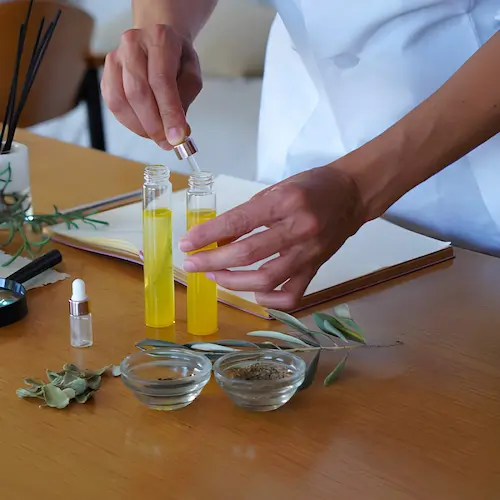
Here’s the honest answer: it depends on your stage.
Choose OEM if:
- You want true product differentiation
- You have a clear formulation vision
- You’re building a long-term brand moat
Choose ODM if:
- You need to launch quickly
- You want to test the market
- You have limited R&D resources
A common strategy? Start with ODM. Scale into OEM.
The Step-by-Step Process of Working with a China Skincare Manufacturer
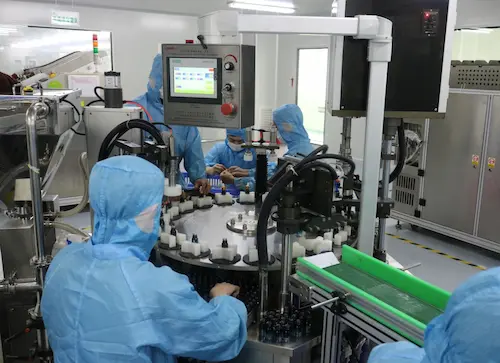
Let’s walk through what actually happens behind the scenes.
Step 1: Product Concept & Positioning
Before contacting any manufacturer, clarify:
- Target market (U.S., EU, Middle East, etc.)
- Skin concern (acne, anti-aging, hydration)
- Price tier (mass, premium, luxury)
This step sounds obvious—but skipping it leads to costly revisions later.
Step 2: Formula Development or Selection
- ODM: Choose from existing formulas and request minor tweaks
- OEM: Develop a custom formula from scratch
Manufacturers may suggest ingredient trends or performance benchmarks based on market data.
Step 3: Sampling & Testing
This is where expectations meet reality.
You’ll evaluate:
- Texture
- Absorption
- Fragrance
- Skin feel
Multiple iterations are common—especially in OEM projects.
Step 4: Packaging & Branding
Packaging is often underestimated.
Options include:
- Stock packaging (faster, cheaper)
- Custom molds (expensive, but unique)
ODM projects typically rely more on existing packaging libraries.
Step 5: Stability & Safety Testing
Professional manufacturers conduct:
- Stability tests
- Microbial tests
- Compatibility tests
These ensure the product remains safe and effective over time.
Step 6: Mass Production
Once samples are approved:
- Raw materials are sourced
- Production lines are scheduled
- Quality control is enforced
Step 7: Logistics & Delivery
Many manufacturers offer end-to-end solutions, including:
- Export documentation
- Customs compliance
- Shipping coordination
What Most Buyers Get Wrong (And Pay for Later)
Let’s be blunt. Many first-time buyers make avoidable mistakes.
Chasing the Lowest Price
A cheaper unit cost can hide:
- Poor stability
- Inconsistent batches
- Regulatory risks
As industry insiders often say: cheap becomes expensive later.
Ignoring Compliance
Different markets require different standards:
- FDA (U.S.)
- EU Cosmetic Regulation
- ASEAN guidelines
ODM formulas are often pre-tested for compliance, but OEM requires more diligence.
Underestimating MOQ (Minimum Order Quantity)
ODM typically has lower MOQs, making it ideal for startups. OEM often requires higher commitments due to custom development.
Lack of Clear Communication
Vague briefs lead to vague products.
A good manufacturer can guide you—but they can’t read your mind.
How to Choose the Right Skincare Manufacturer in China
Not all factories are created equal.
Look for:
- Certifications: GMPC, ISO standards
- R&D Capability: A strong lab matters more than a fancy showroom.
- Transparent Process: Clear timelines, documented testing, structured sampling.
- Flexibility: Can they support both ODM and OEM as you scale?
- Communication Speed: Slow replies often signal deeper operational issues.
OEM & ODM Trends to Watch in 2026
The industry is shifting—fast.
Clean & Functional Beauty
Ingredients like niacinamide, peptides, and probiotics dominate demand.
Hybrid Products
Think skincare + makeup, or SPF + serum.
Sustainability Pressure
Eco-packaging and refill systems are no longer optional.
Faster Iteration Cycles
Brands are launching “micro-collections” instead of large product lines.
ODM manufacturers are adapting quickly, updating formula libraries to reflect these trends.
A Real-World Strategy That Works
Here’s a pattern seen across successful brands:
- Launch with ODM (fast, low risk)
- Identify best-selling SKUs
- Transition those into OEM versions
- Build proprietary formulations
This hybrid approach balances speed and differentiation.
Final Thoughts
Working with a China skincare manufacturer isn’t just a transaction—it’s a partnership.
OEM gives you control.
ODM gives you speed.
The smartest brands don’t treat it as a binary choice. They evolve.
If you approach the process with clarity, patience, and the right partner, you’re not just manufacturing products—you’re building a brand with staying power.
FAQs
What is the main difference between OEM and ODM?
OEM means you create the formula; ODM means the manufacturer provides it.
Which is better for startups?
ODM is usually better due to lower cost and faster launch time.
How long does production take?
ODM: about 30–45 days; OEM: typically 45–60+ days.
Can I customize an ODM product?
Yes, but only to a certain extent (e.g., fragrance, texture, packaging).
Is China safe for skincare manufacturing?
Yes—if you choose certified, experienced manufacturers with proper quality control.